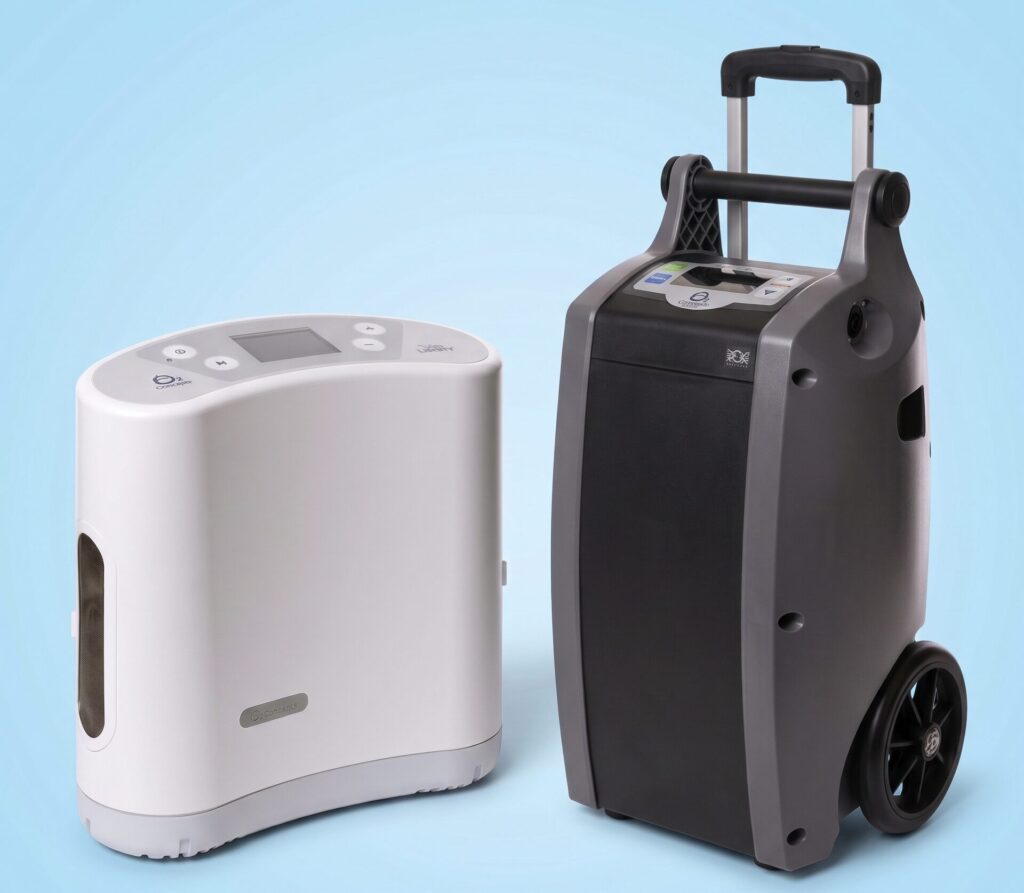
What is an Oxygen
Concentrator?
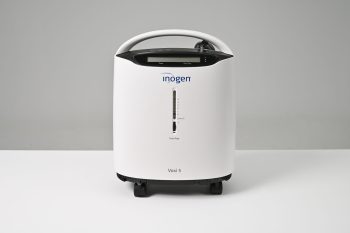
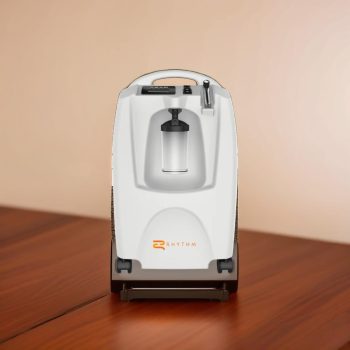
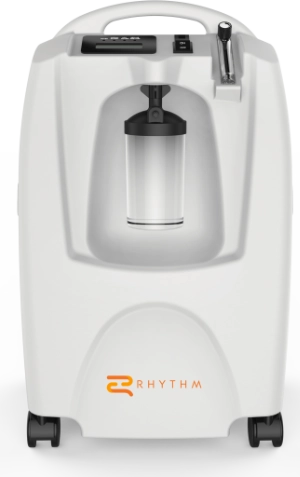
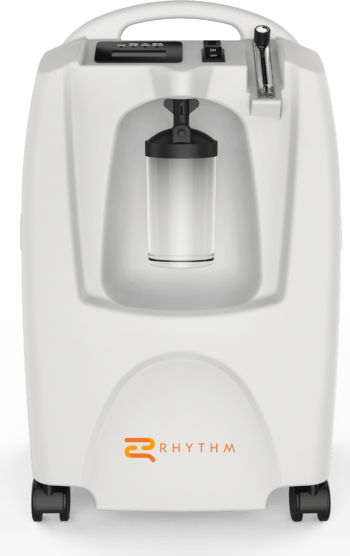
An oxygen
concentrator is a device used to provide oxygen therapy
to a patient at substantially higher concentrations than
available in ambient air. They are used as a safer, less
expensive, and more convenient alternative to tanks of
compressed oxygen.
The simplest oxygen concentrator is capable
of continuous delivery of oxygen and has internal functions
based around two cylinders, filled with a zeolite material,
which selectively adsorbs the nitrogen in the air. In each
cycle, air flows through one cylinder at a pressure of
around 20 lbf/inČ (138 kPa, or 1.36 atmospheres) where the
nitrogen molecules are captured by the zeolite, while the
other cylinder is vented off to ambient atmospheric pressure
allowing the captured nitrogen to dissipate.
Typical units have cycles of around 20
seconds, and allow for a continuous supply of oxygen at a
flow rate of up to approximately five liters per minute (LPM)
at concentrations anywhere from 50 to 95 %. This process is
called pressure swing adsorption (PSA). Since 1999,
concentrators providing up to 10 LPM have been available for
high flow patients, in sizes not much larger or heavier than
5 LPM concentrators.
What is a Portable
Oxygen Concentrator?
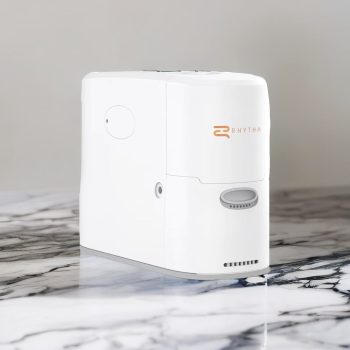
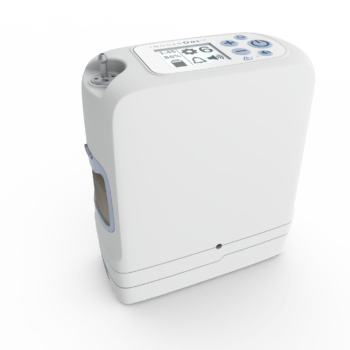
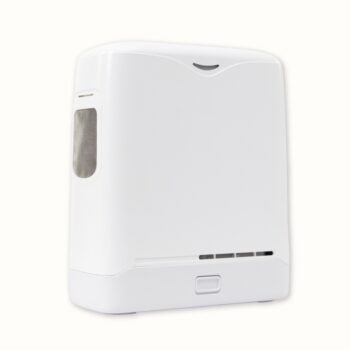
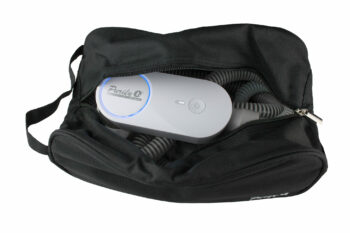
Since 2000, a number of manufacturers have
introduced portable oxygen concentrators. Typically,
these some version of pulse flow or demand flow to deliver
oxygen only when the patient is inhaling. However, there is
a portable oxygen concentrator with up to 3 LPM of
continuous-flow oxygen. This device also has pulse flow
available to either provide higher flows or reduce power
consumption. These portable concentrators typically plug
into a wall outlet like the larger, heavier stationary
concentrators.
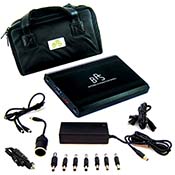
Portable oxygen concentrators usually can
also be plugged into a vehicle DC adapter, and most have the
ability to run from battery power as well, either for
ambulatory use or for use away from power or for airplane
travel. The FAA has approved portable oxygen concentrators
for use on commercial airlines, although it is necessary to
check in advance whether a particular brand or model is
permitted on a particular airline.
Historically, demand or pulse flow
concentrators have not been used for nocturnal use—sleeping.
If the nasal cannula moves such that the concentrator is not
able to detect when the patient is inhaling, it is unable to
deliver the pulse while the patient is inhaling.
|